April 28, 2026
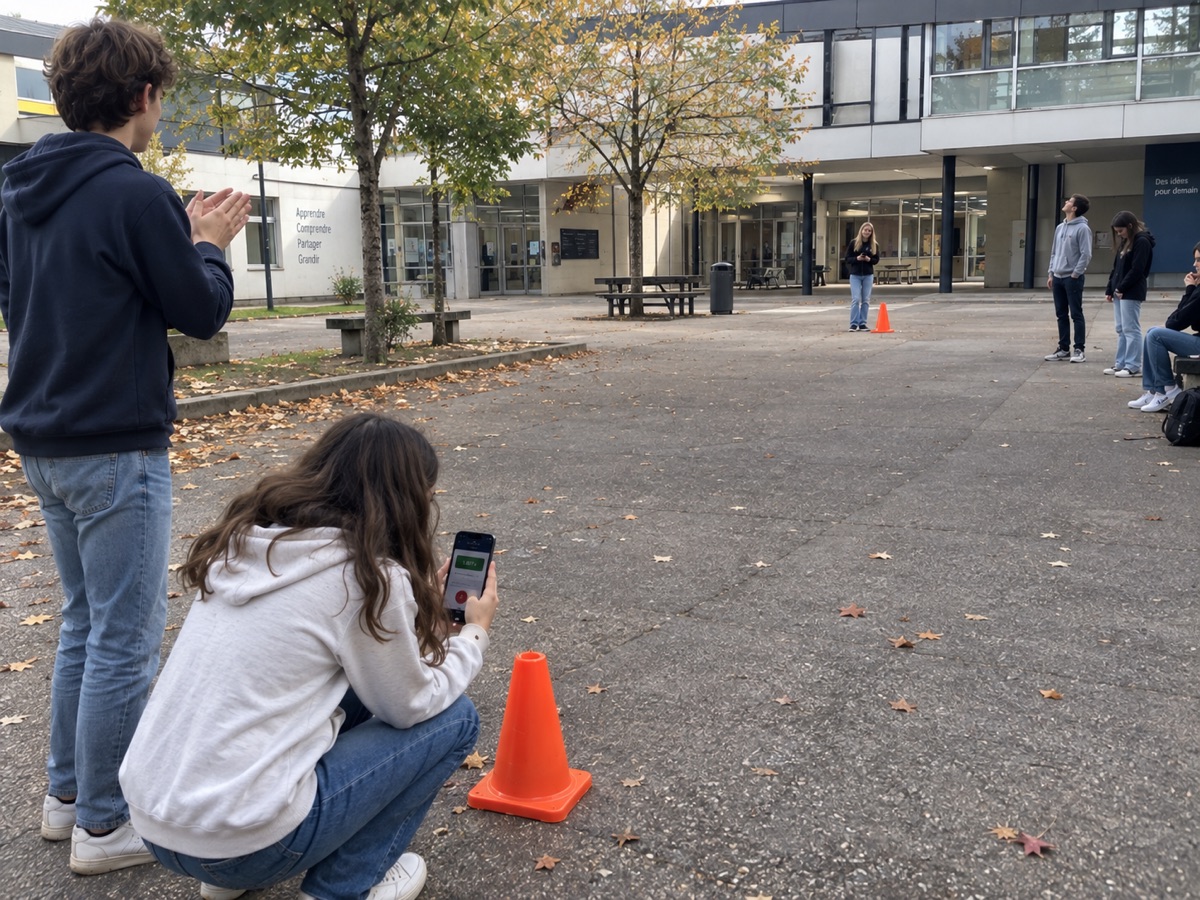
Speed of sound - Seven activities with a smartphone
Measure the speed of sound with a smartphone using seven hands-on experiments, including wave interference and Helmholtz resonance.
Read more →
Explore our guides for teaching science through experimentation. You will find scientific explanations, thematic dossiers, examples of activities, analyses of current topics, and practical tips for bringing smartphones, tablets, and digital tools into your lessons.
Whether you are preparing a lesson in physics, chemistry, life sciences, or technology, these guides help you understand scientific concepts, discover new teaching approaches, and carry out hands-on experiments in the classroom or in the field.
44 articles
Measure the speed of sound with a smartphone using seven hands-on experiments, including wave interference and Helmholtz resonance.
Read more →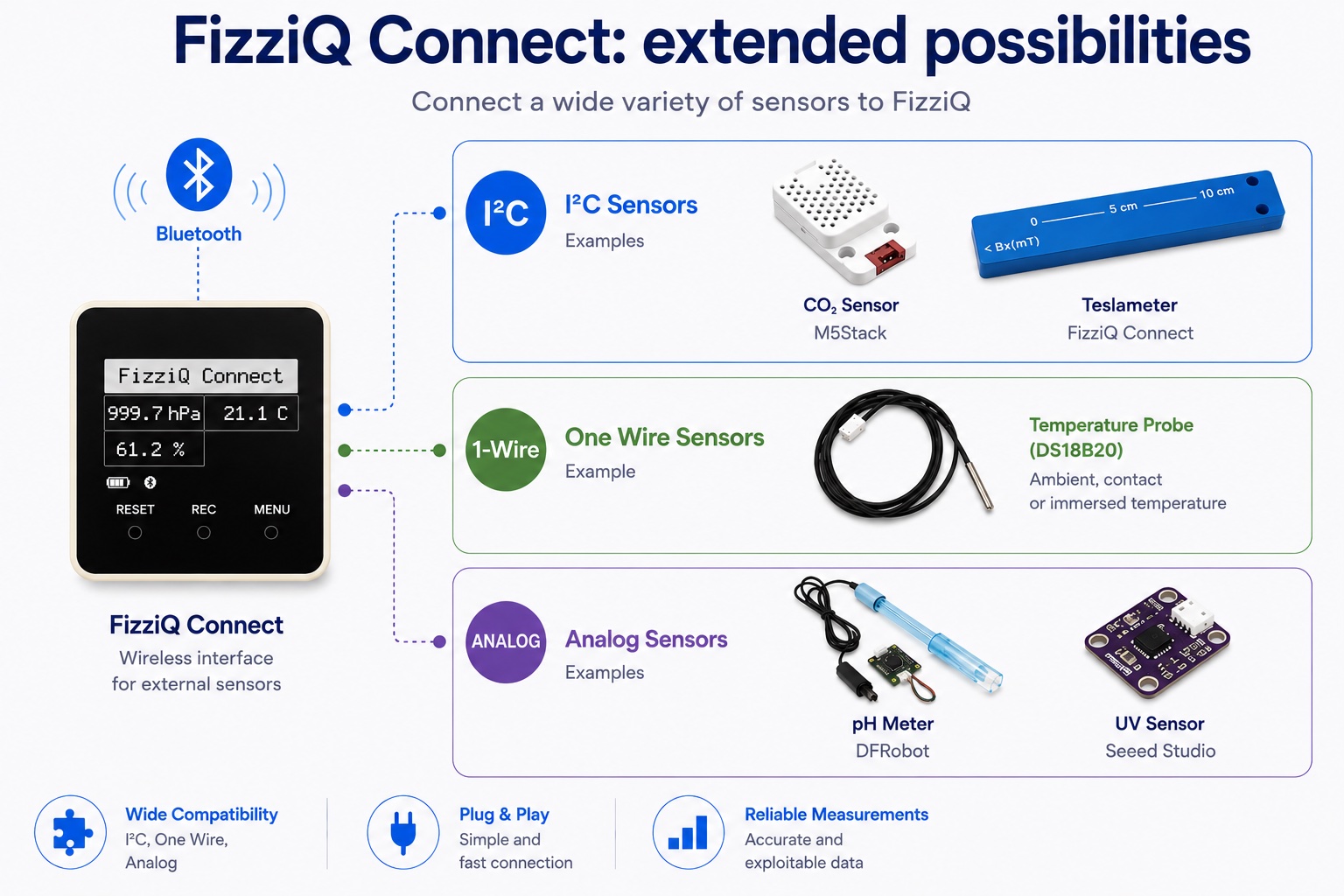
Connect external sensors and microcontrollers to FizziQ over Bluetooth or USB: FizziQ Connect modules, message formats, recognized prefixes, Arduino, ESP32, micro:bit.
Read more →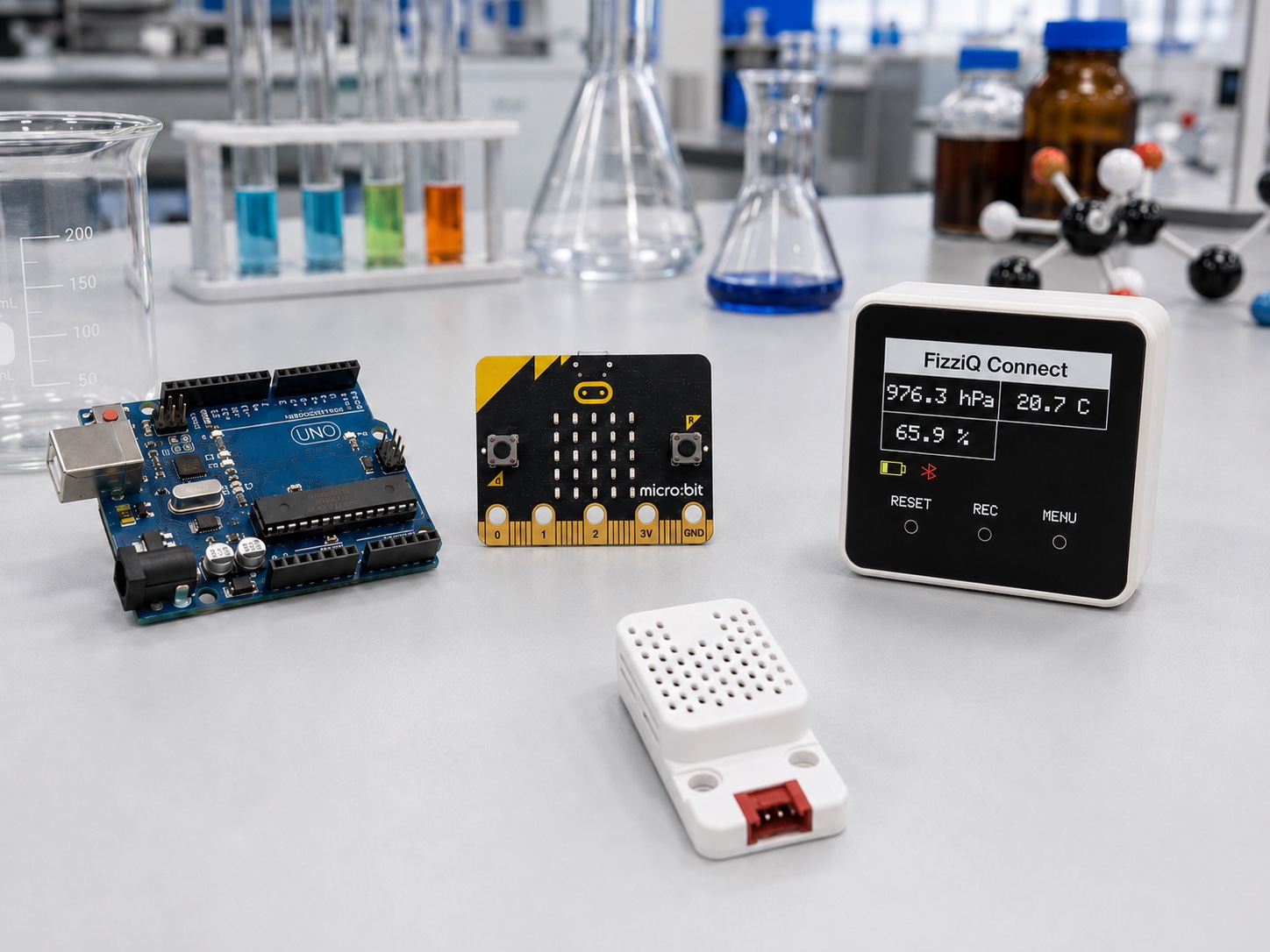
Build a scientific instrument with Arduino, micro:bit or ESP32: choosing a sensor, calibration, sampling, uncertainties, and sending measurements to FizziQ.
Read more →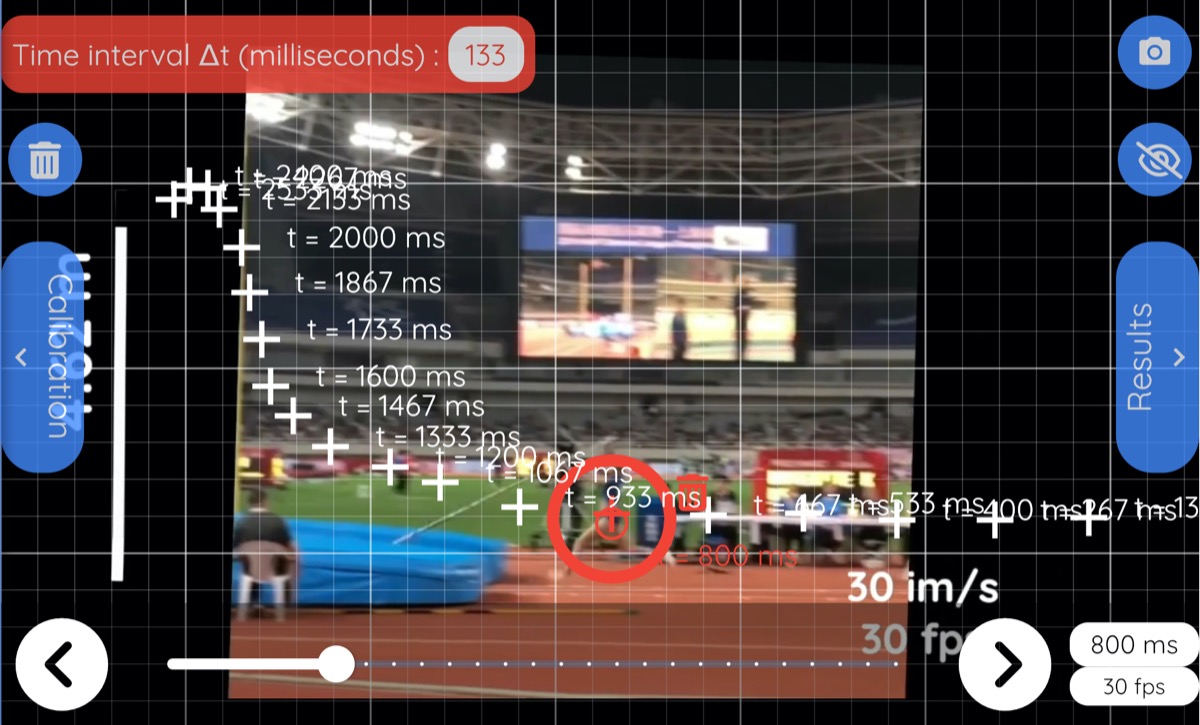
How a video becomes a measuring instrument: calibration, point marking, velocity, acceleration, uncertainties and 12 experiments with FizziQ Mobile and Web.
Read more →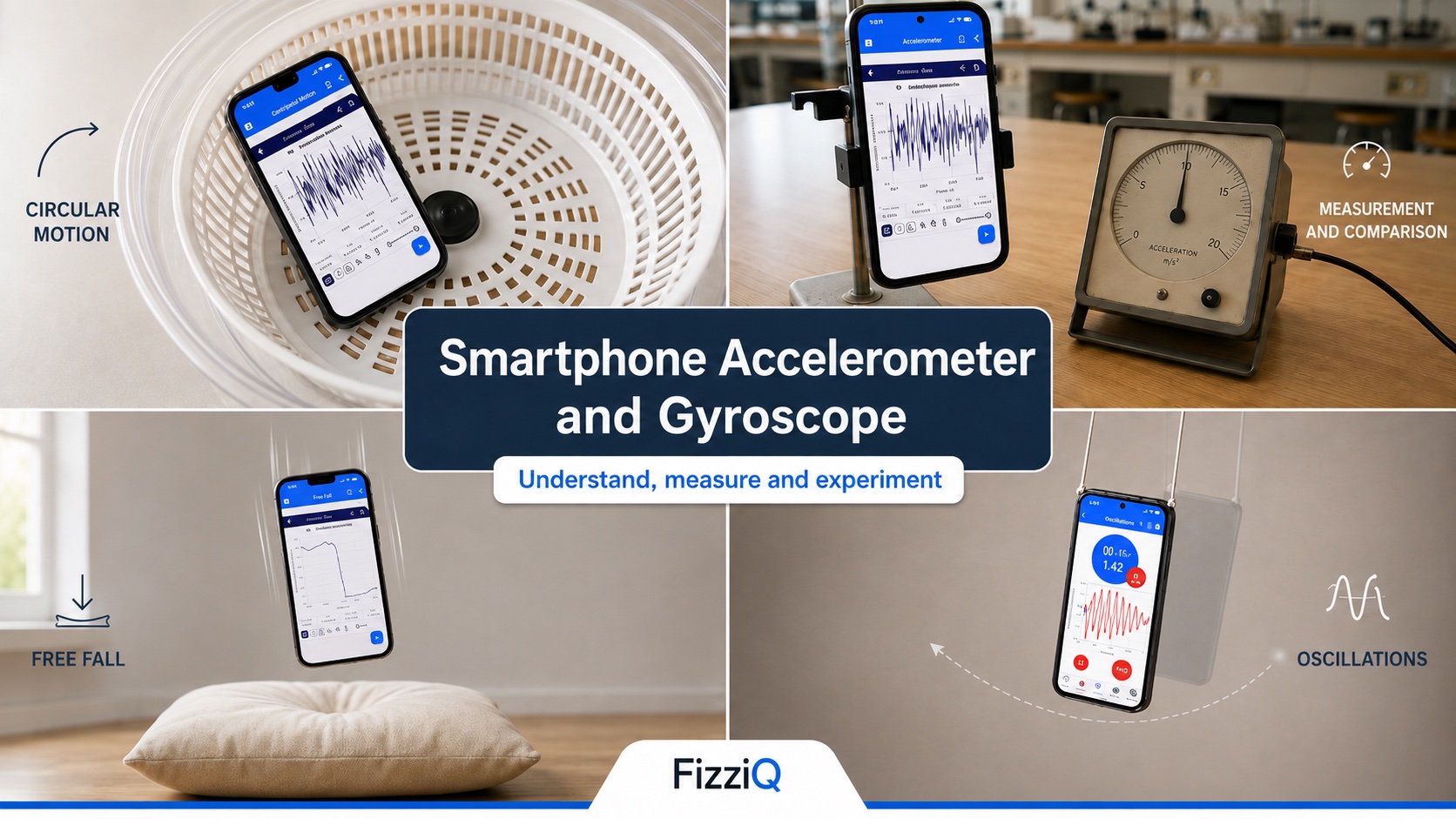
Understand the accelerometer and gyroscope in smartphones and tablets, then discover how to study motion with FizziQ using inertial sensors, video analysis, GPS, and acoustic methods.
Read more →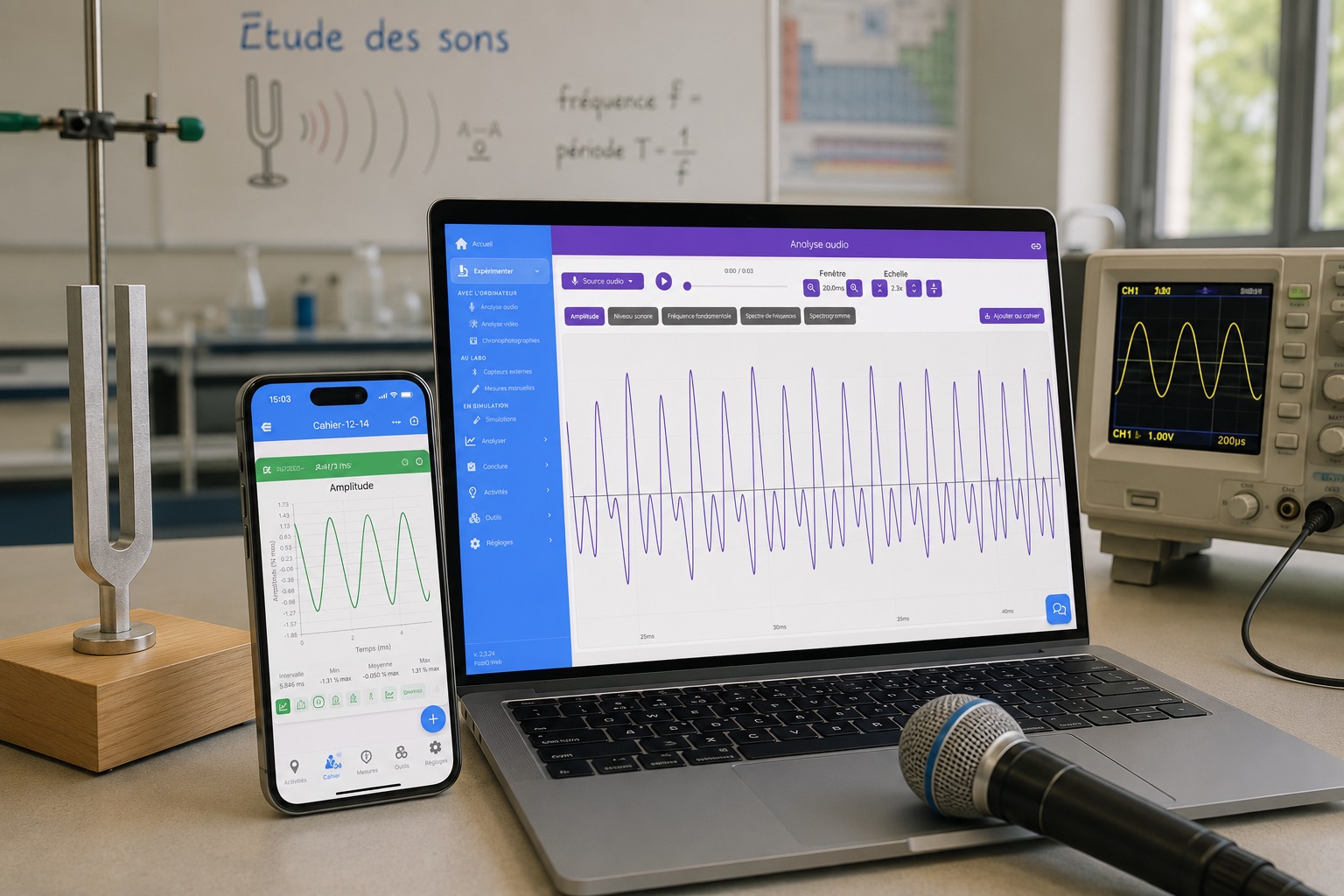
Decibels, frequency, spectrum, spectrogram: the complete guide to measuring and analyzing sound with a smartphone or computer, with 12 experiments.
Read more →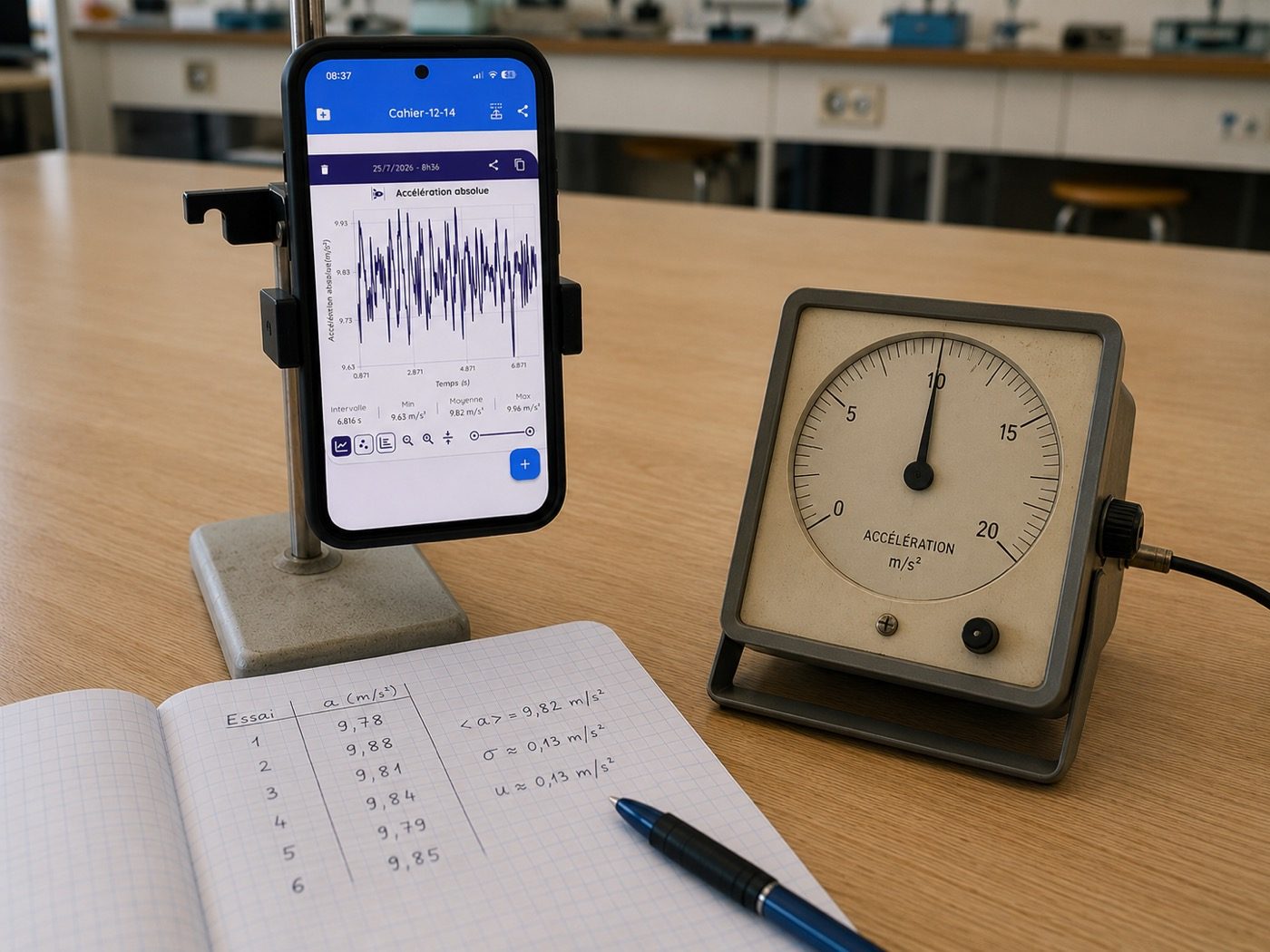
Understand errors, variability, calibration, uncertainty and confidence intervals using smartphone sensors and FizziQ experiments, from high school to college.
Read more →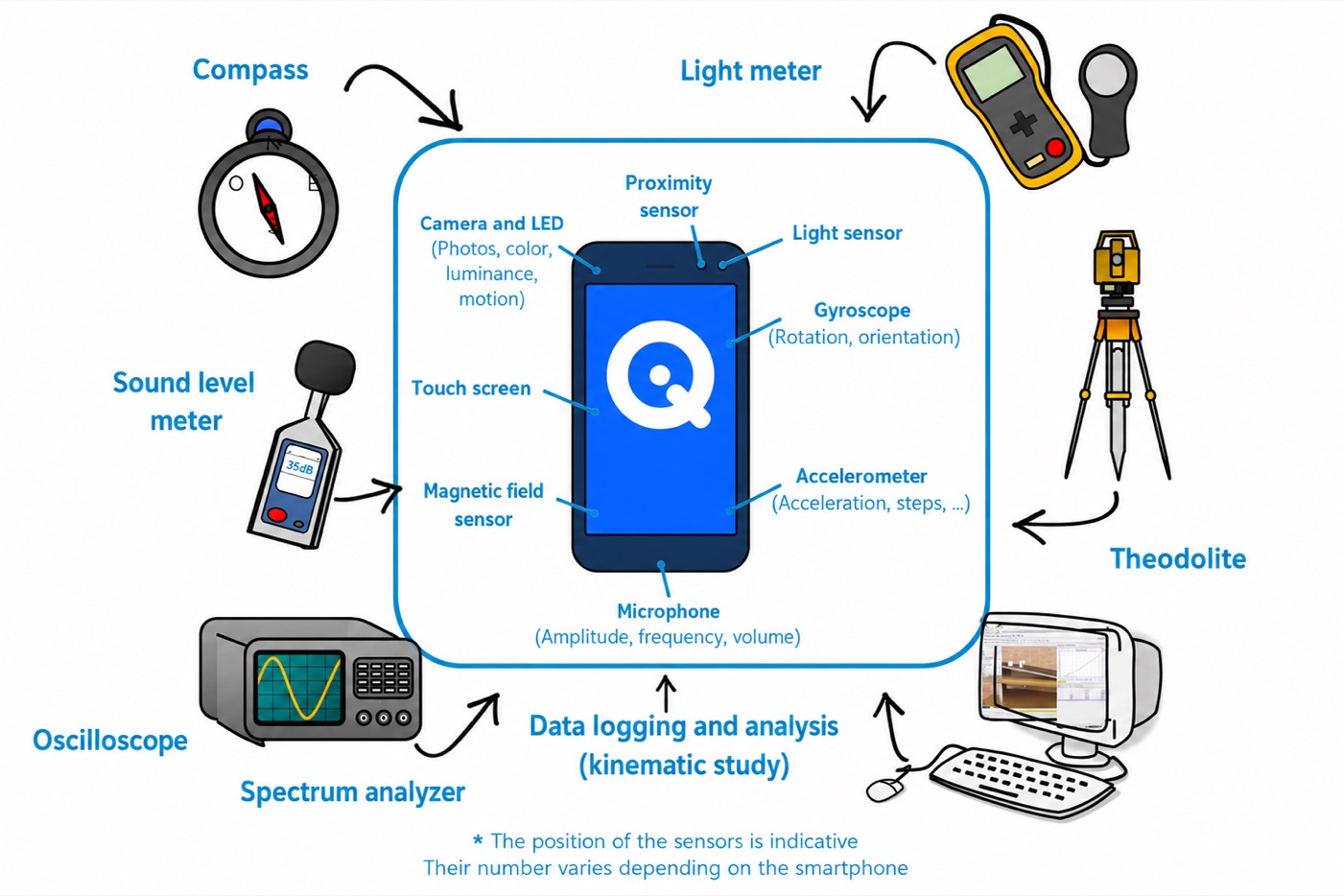
The complete guide to smartphone sensors: accelerometer, gyroscope, magnetometer, microphone, camera, GPS. How they work, how accurate they are, and 120+ science experiments to use them.
Read more →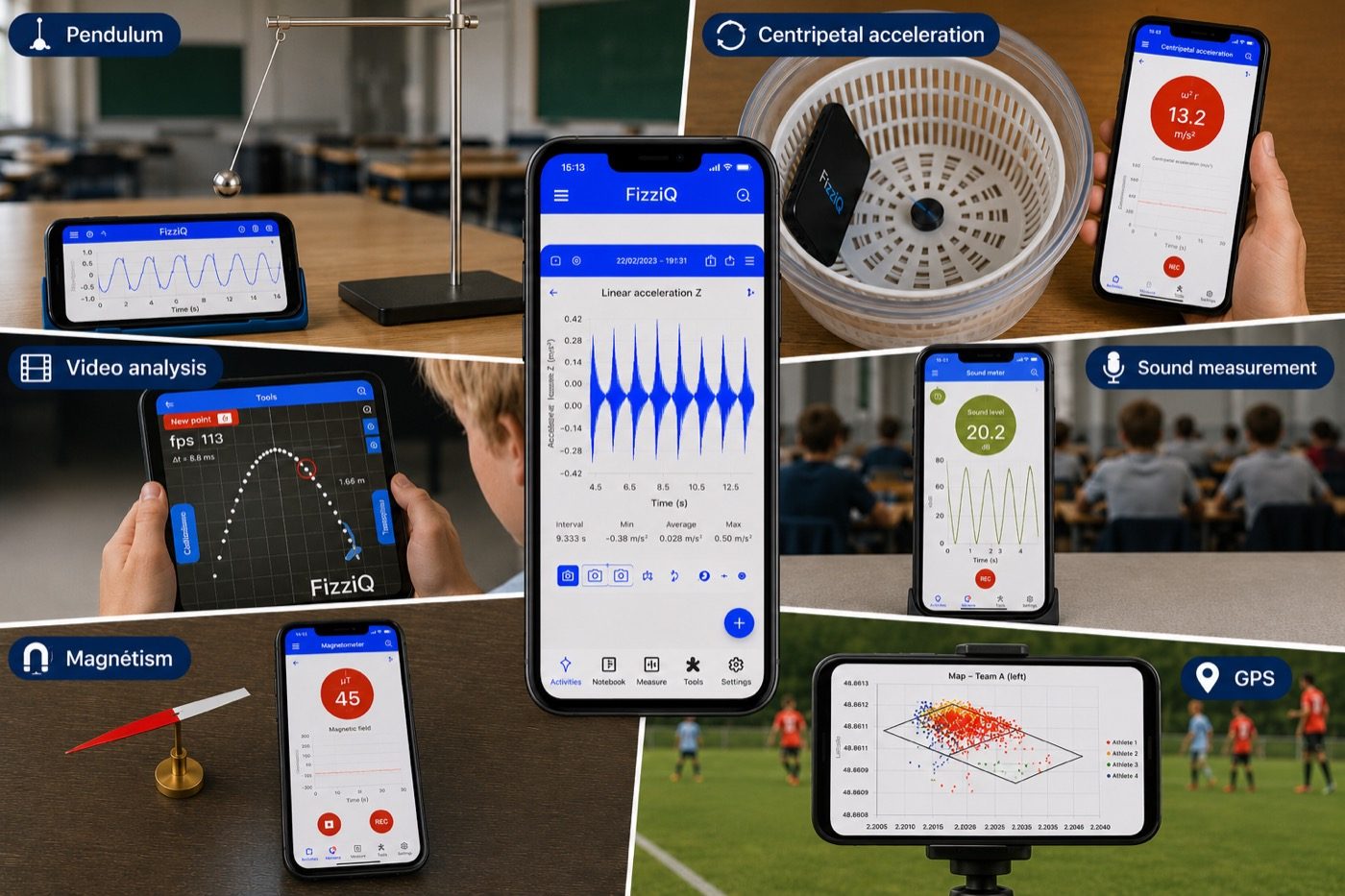
Doing physics with a smartphone: the complete guide. Accelerometer, microphone, GPS, camera, 10 detailed experiments and curriculum links.
Read more →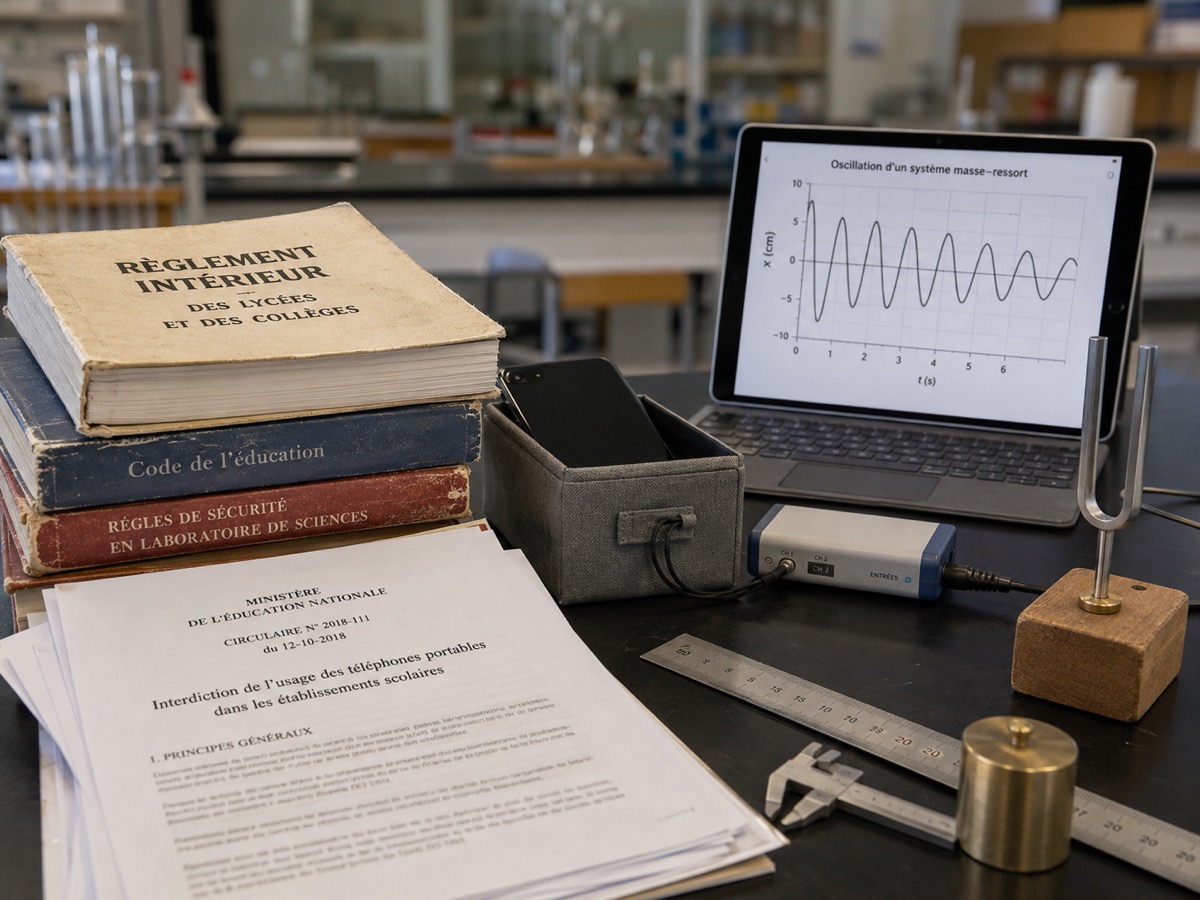
As smartphone bans spread across schools in the US, UK, Canada, and Australia, science teachers face a challenge: how to continue hands-on experiments without mobile devices? Explore policy approaches worldwide and discover practical alternatives including FizziQ Web, tablets, and external sensors.
Read more →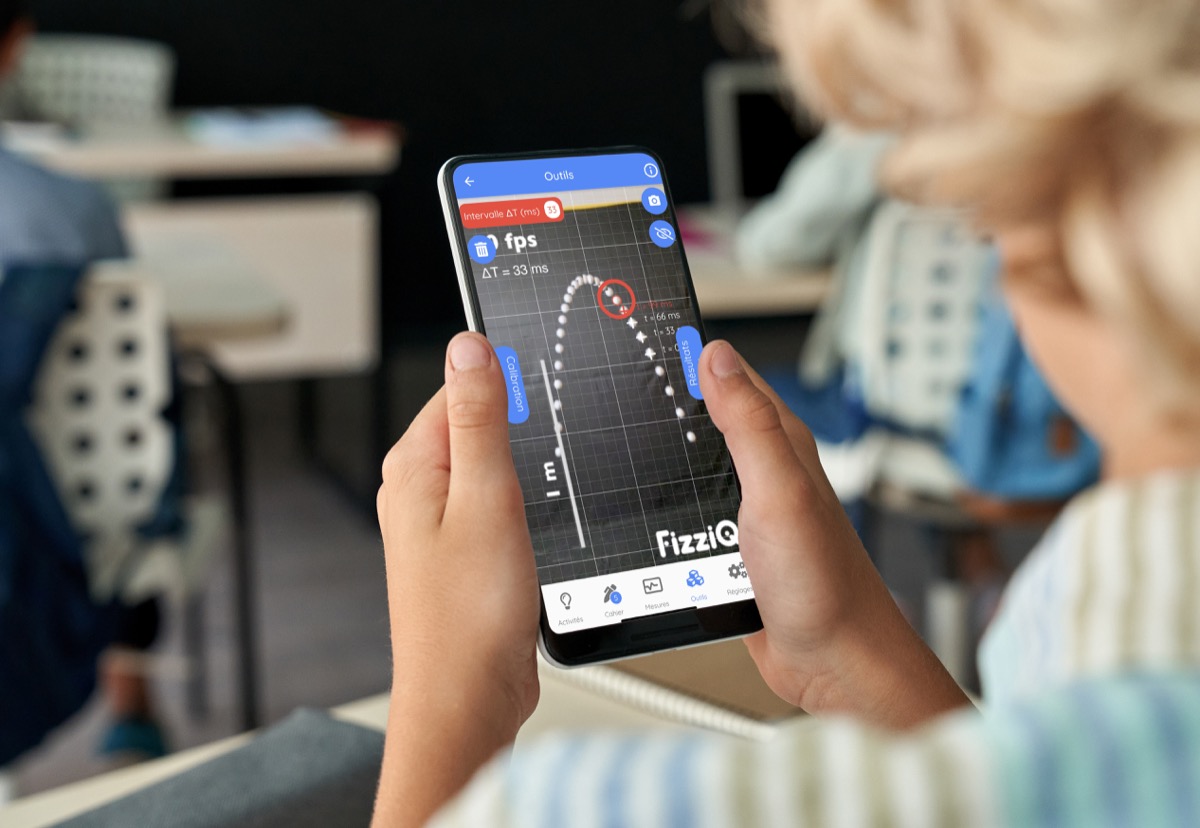
Discover how video analysis improves student engagement, inquiry-based learning and understanding of motion in middle and high school physics.
Read more →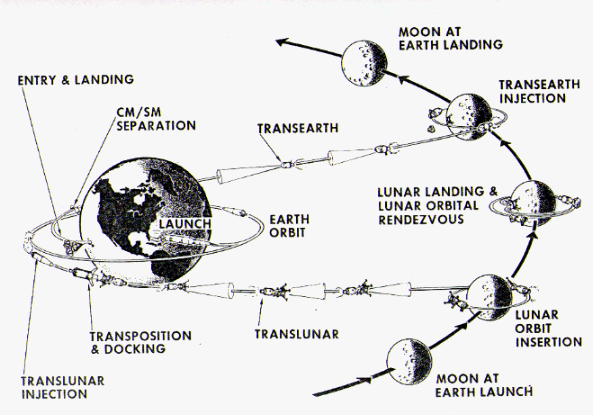
Discover the physics of space travel with 7 hands-on smartphone experiments — weightlessness, orbits, Kepler's laws — inspired by Artemis II and the ISS.
Read more →
Learn how to visualize sound waves using a smartphone through hands-on science experiments that reveal how sound propagates in air.
Read more →
Discover the Doppler effect through five classroom activities using a smartphone to measure speed and explore real-world applications.
Read more →
Explore how the accelerometer, a key sensor in smartphones, functions and its uses from motion analysis to emergency alerts, including MEMS technology and calibration insights.
Read more →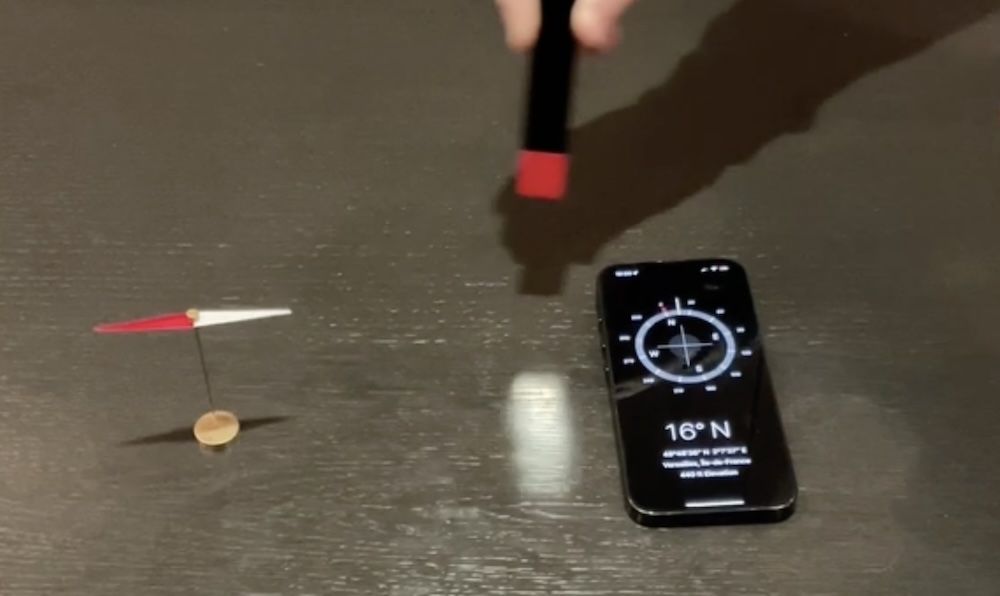
Discover how smartphone magnetometers measure magnetic fields, support navigation and VR, and enable classroom experiments on Earth's magnetism.
Read more →
Explore the science of sound waves with 6 easy tone generator experiments using your smartphone or tablet. Discover frequencies, audiograms, and sound speed.
Read more →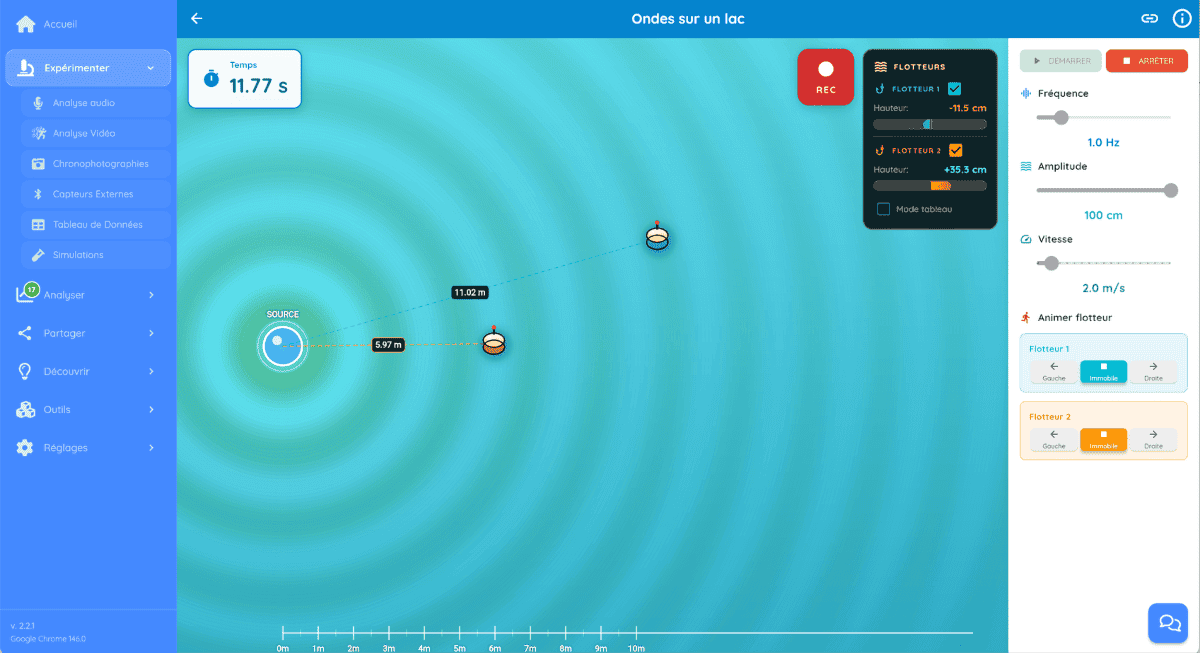
Eight ready-to-use physics activities using the FizziQ Web Simulation module: pendulum, spring oscillator, centrifuge, ballistics, ideal gas laws and wave propagation, all accessible from a browser.
Read more → From teacher-built tools in the 1990s to generative AI, a complete history of science education software in UK and US schools — and what comes next.
Read more →
A physics-based investigation into space cooling myths, heat transfer, and how scientific reasoning helps challenge bold tech claims.
Read more →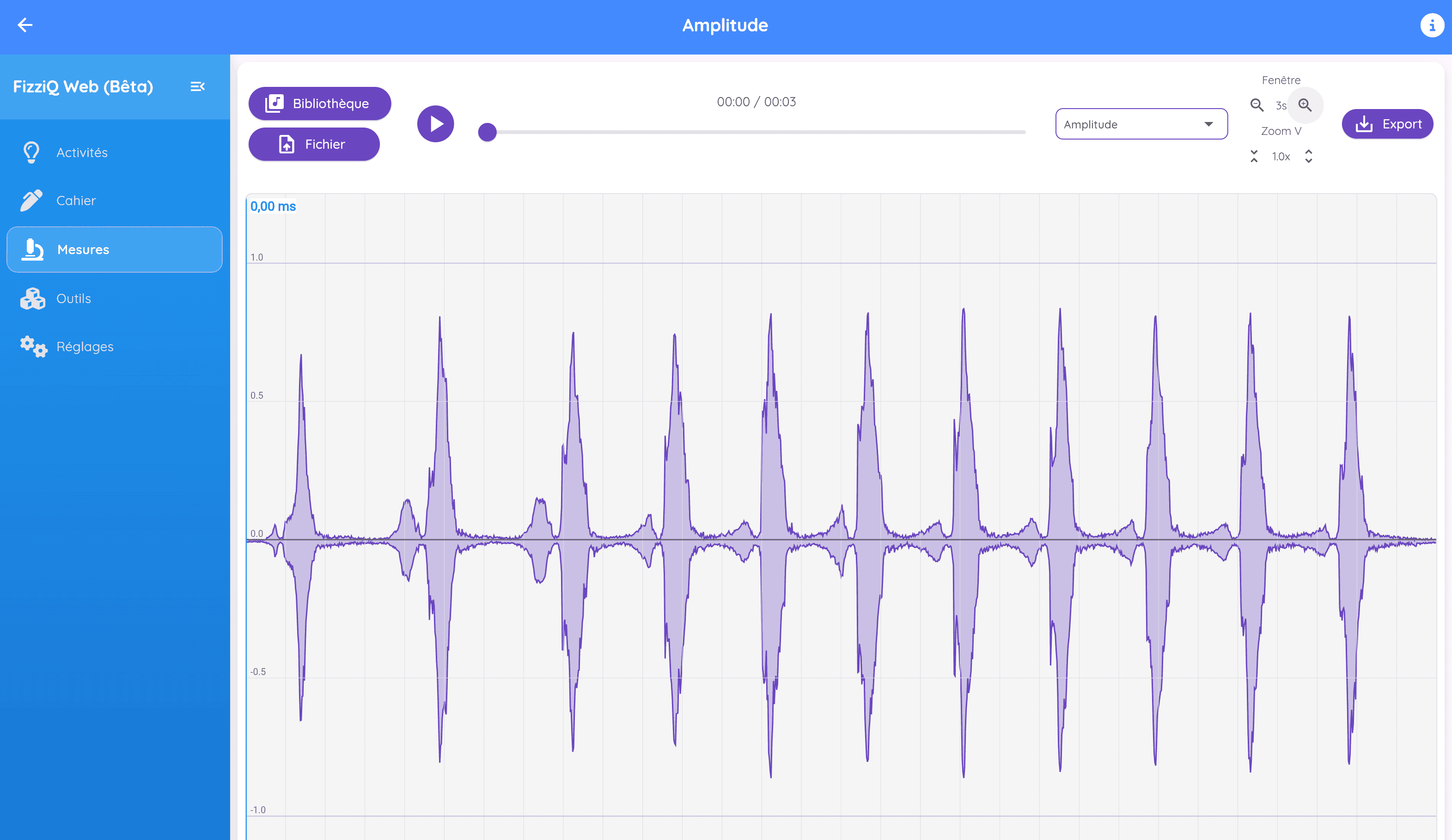
FizziQ Web adapts the mobile physics app for school computers. Complete kinematic video analysis, advanced audio analyzer with spectrogram, digital notebook with spreadsheet and LaTeX recognition. Per
Read more →
We’re excited to introduce FizziQ Anthracite, our brand-new version, available today for all beta testers. It’s a major update, with many improvements for you to explore, test, and most importantly:...
Read more →
Add mathematical formulas to the experiment...
Read more →
Ask FizziQ is a smart scientific assistant integrated into the FizziQ app that helps students understand scientific concepts and guides them through experiments.
Read more →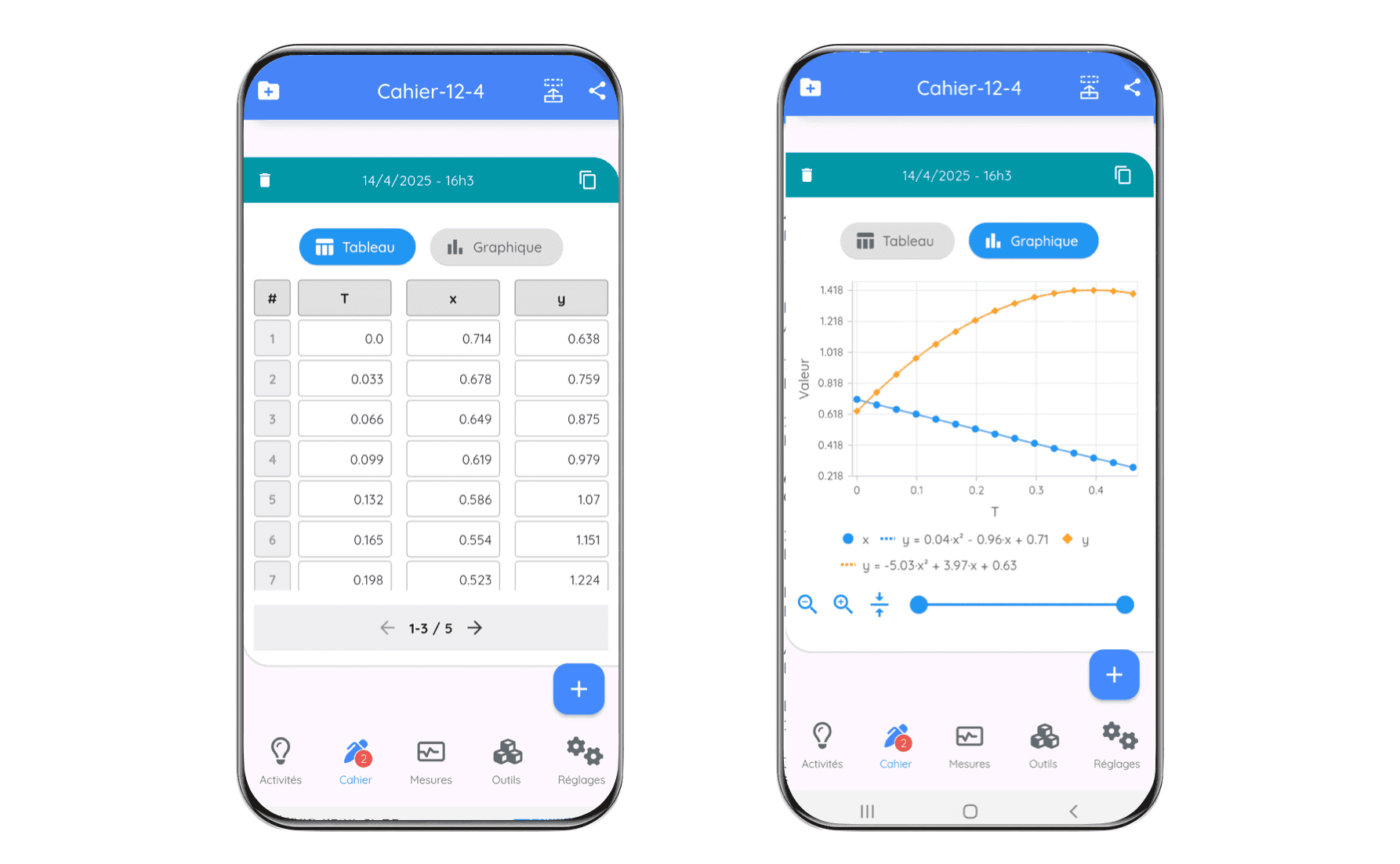
Explore the FizziQ Spreadsheet, an integrated tool for entering, manipulating, and visualizing numerical data directly within the app.
Read more →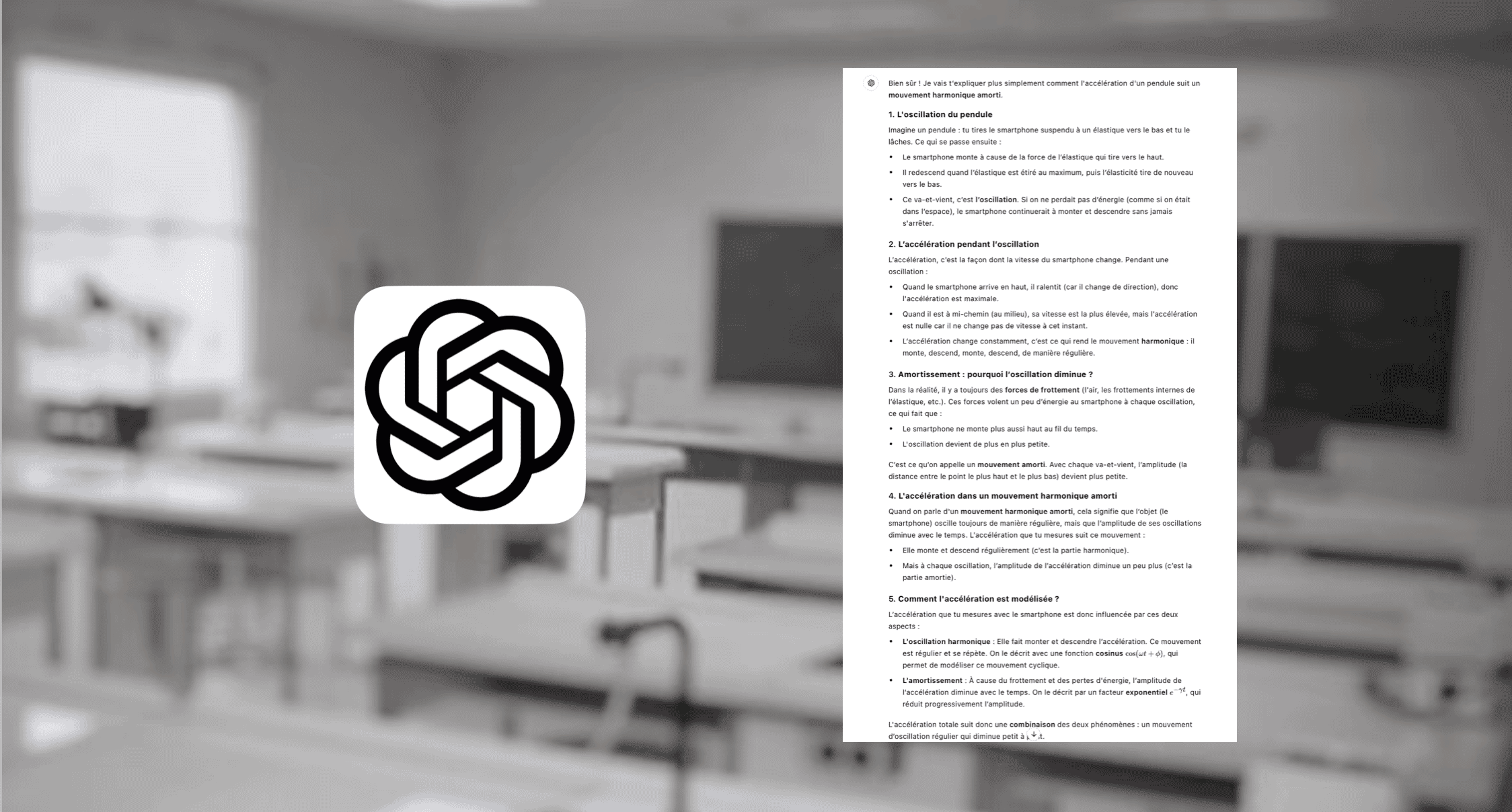
Discover how integrating AI into science education can enhance learning. Our proposal combines hands-on experiments, like using a smartphone’s accelerometer with AI generative models, to deepen studen
Read more →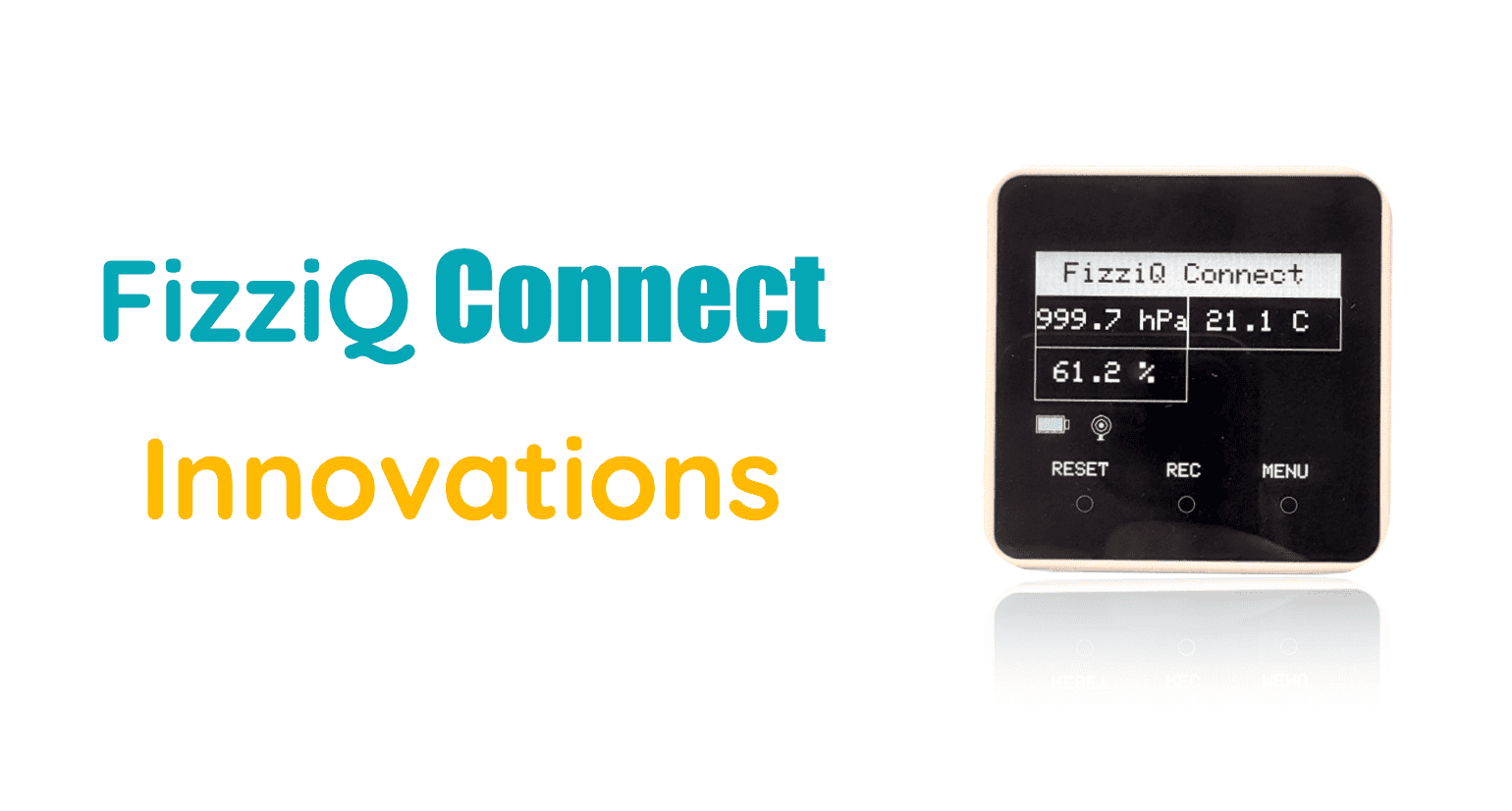
FizziQ Connect is an innovative computer-assisted experimentation solution for science education. Compatible with many sensors, it features radio broadcast mode, local data recording, and full autonomy. With its intuitive touchscreen interface and easy updates, it's accessible, flexible, and affordable for all schools.
Read more → Discover how artificial intelligence is transforming science education through innovative practical experiments. Explore the opportunities AI offers to enrich learning, strengthen critical thinking, and optimize each step of scientific investigation.
Read more →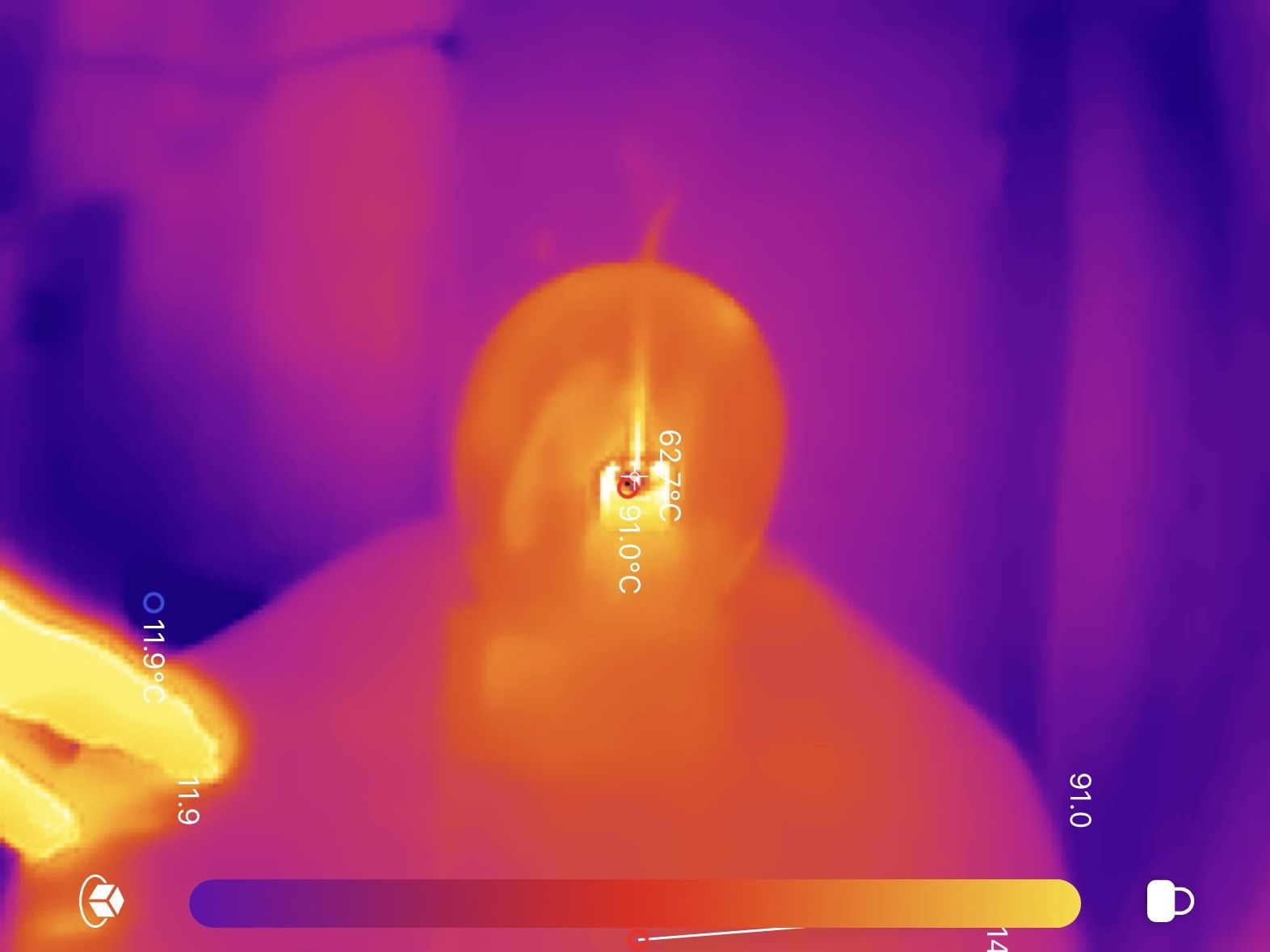
Discover practical experiments and accessible tools to explain the greenhouse effect and climate change in the classroom. This article offers realistic experiments and pedagogical analogies to help teachers demonstrate these complex phenomena in an engaging and understandable way for students.
Read more →
Discover how to reproduce 12 famous scientific experiments with just a smartphone. From Pythagoras to Einstein, explore easy and captivating experiments without complex equipment. Use apps like FizziQ to explore scientific principles and understand great discoveries. Perfect for teachers and science enthusiasts curious to learn through experimentation.
Read more →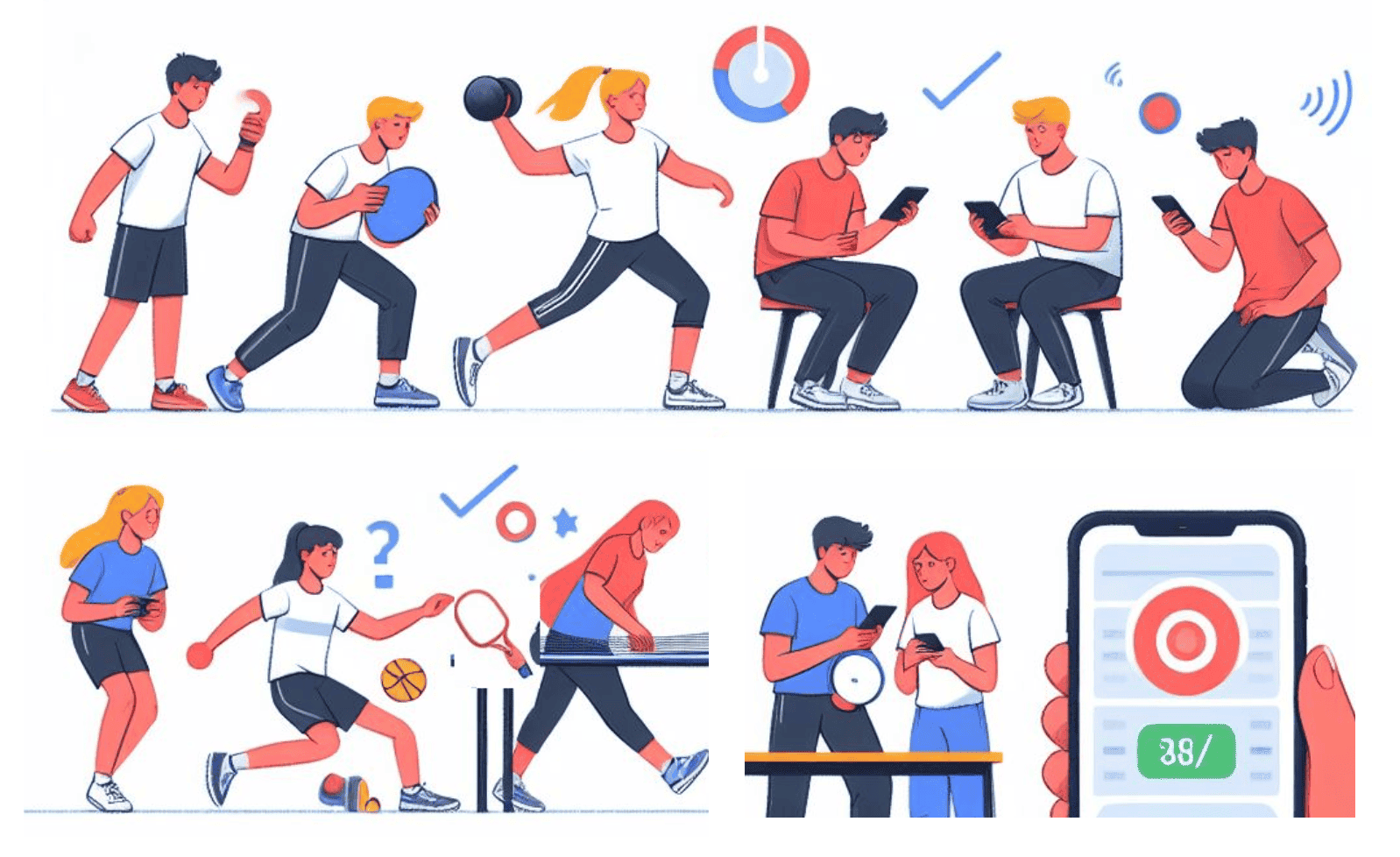
Discover 15 innovative science projects from the Physics and Sports competition. Inspiring ideas for physics experiments using smartphones.
Read more →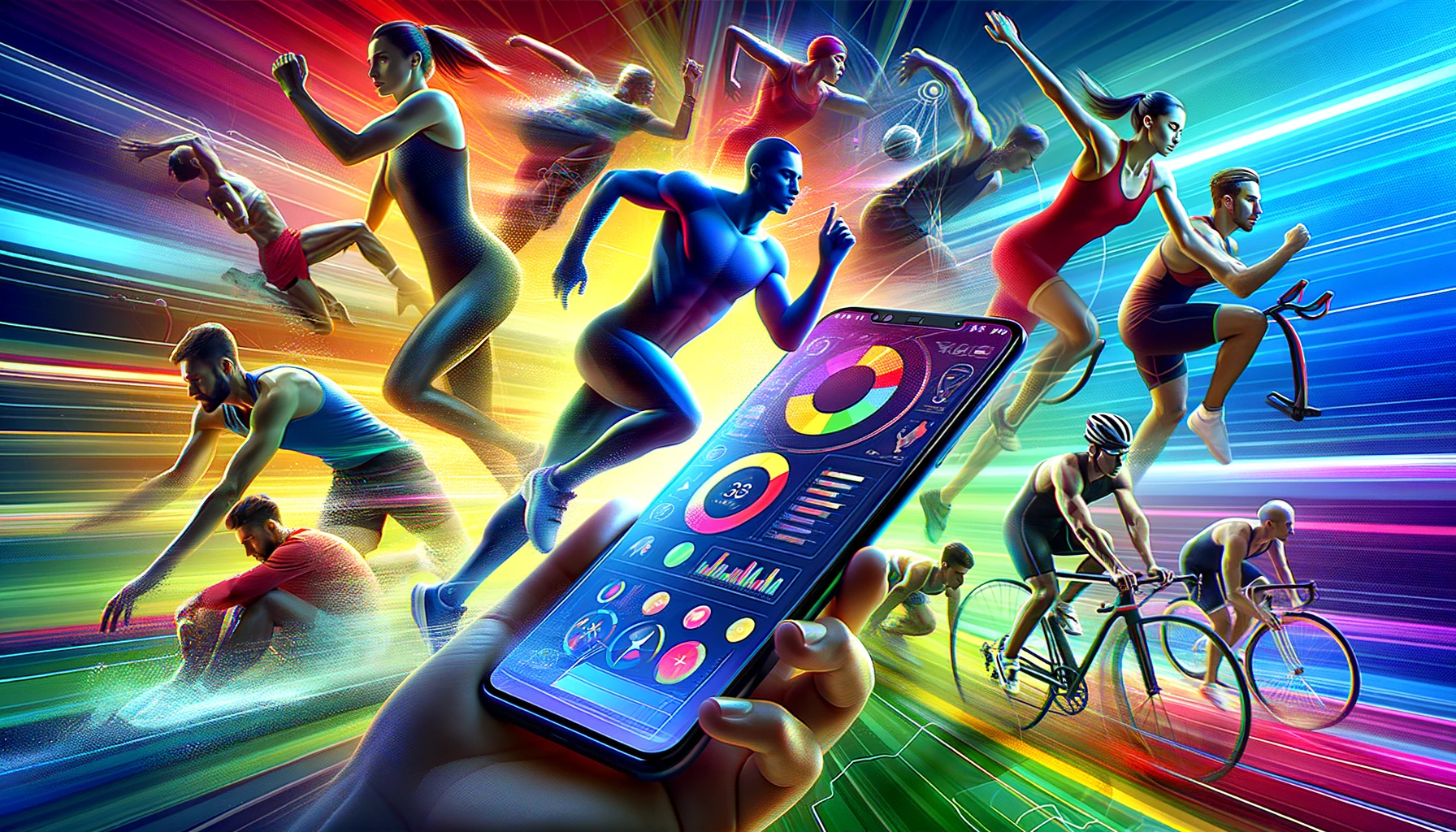
Explore the fascinating intersection of sports and science using your smartphone! Dive into the physics behind 12 popular sports, from running to diving, and discover how everyday technology can enhance understanding and performance. Uncover the science in every jump, throw, and kick!
Read more →
Delve into the captivating world of gravity with 7 educational science experiments using a smartphone. Learn about Zero G flights, measuring g with a stopwatch, the intuitions of Einstein's thought experiments, gravity at the equator and pendulums on the moon. An educational exploration for high school and university students, and all physics enthusiasts!
Read more →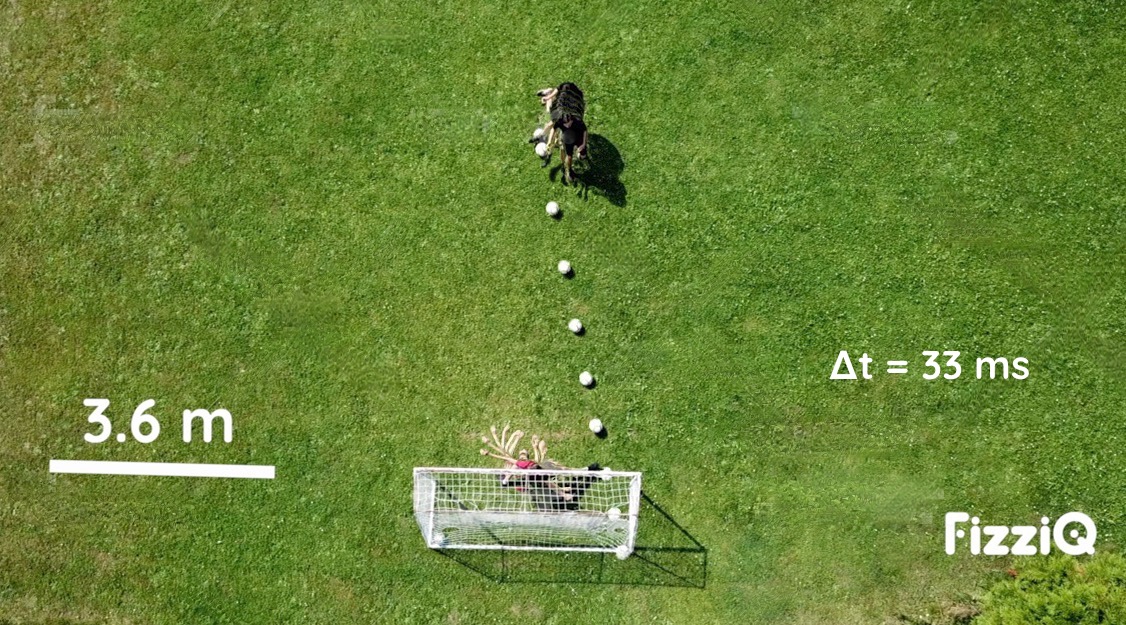
How to use chronophotographs in the classroom to teach motion analysis and the laws of physics. Find photos on sports or everyday life in our database, conduct analysis in minutes, export data in a spreadsheet or graph them in FizziQ digital notebook. Complete with linear and quadratic interpolation to compute position, speed, acceleration, kinetic and potential energy.
Read more →
In this article, discover how to measure Pi with a smartphone and explore the educational benefits of this fun and creative challenge. Reflect on the notion of constant, work on precision and error, and stimulate students' experimental skills. Calculate Pi with physical instruments and make learning math more engaging.
Read more → Looking for a fun and easy way to explore science? Look no further than your smartphone! With the sensors built into your device, you can perform 50 different physics measurements, turning your phone into a portable science lab. From acceleration and gravity to sound and light, these measurements are simple to do and can help you learn more about the world around you. So why not unlock the power of your smartphone and start your scientific journey today?
Read more →
With the Olympic Games in sight, discover 5 amazing science experiments to conduct with a smartphone to understand the science of pole vaulting, how a pedometer works or why it can be bad for health to run bare foot.
Read more →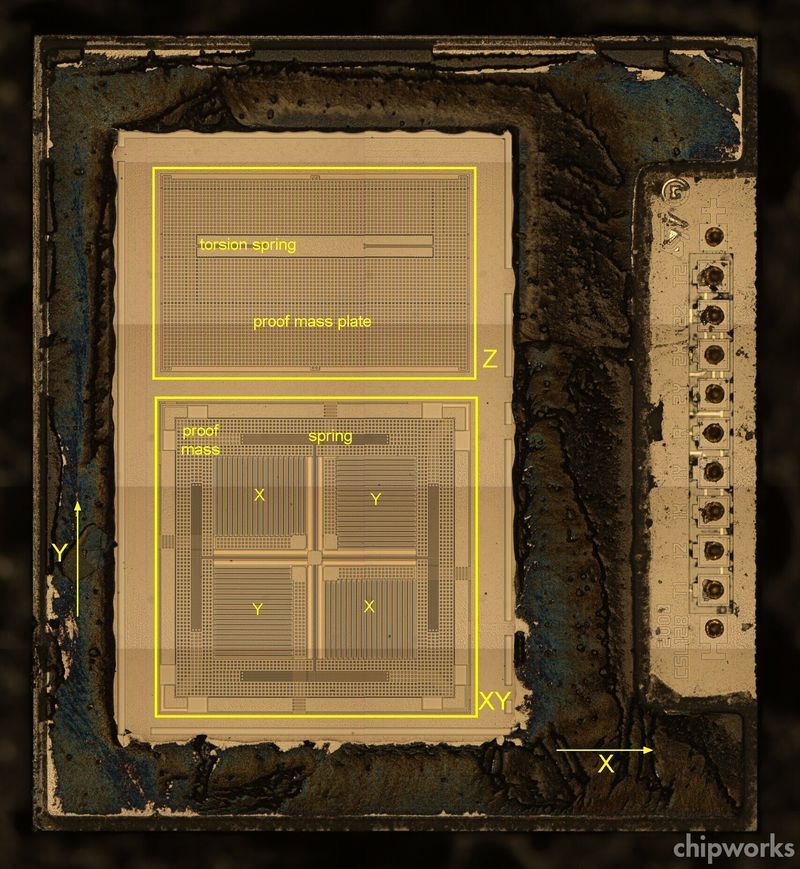
Your smartphone is packed with sensors! Discover what they are, their use, how they work and how to get access to their data.
Read more → Discover 5 exciting science projects to do math using a smartphone or a tablet. These activities use the sensors in smartphone to help students understand key mathematical concepts.
Read more → Does adding two sounds really increase the sound level by 3...
Read more → Understand the difference between luminance and brightness measurements in FizziQ. Learn which light sensor to use for your physics experiments.
Read more →
Practical tips and best practices for using FizziQ effectively in your classroom. Learn how to organize smartphone-based science experiments with students.
Read more → What is the difference between linear and absolute...
Read more →
Discover how smartphones can transform science education through inquiry-based learning. FizziQ turns mobile devices into powerful scientific instruments.
Read more →Turn your smartphone into a science lab.